
Clash of Empires World War 2 The Battle for North Africa 1941-1942
Updated: Sep 5
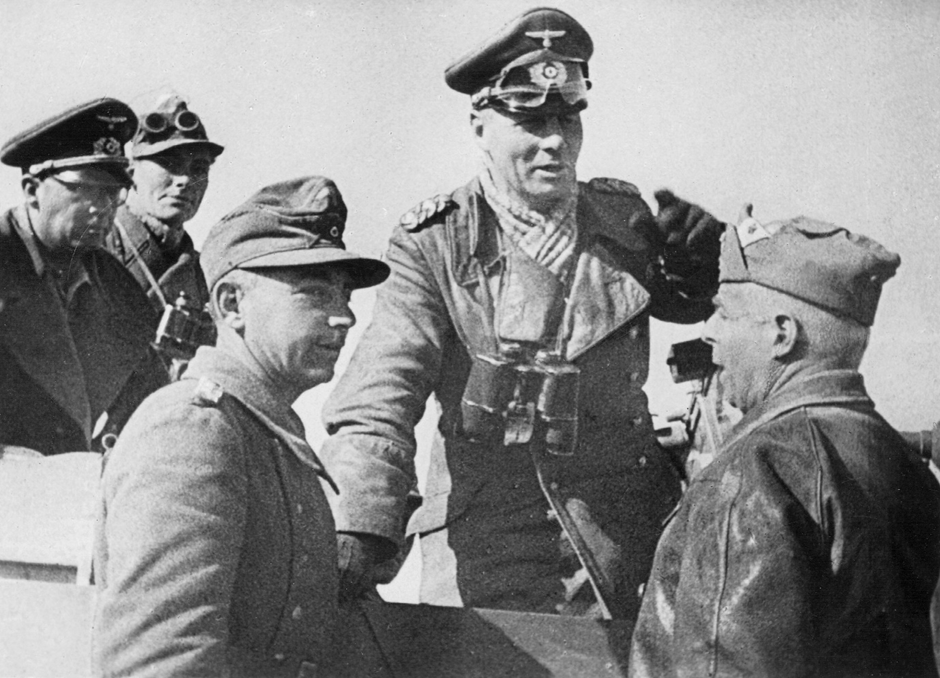
In this article I’m going to use the Clash Battle System to recreate German operations in the Mediterranean area from 1941 to 1942. While Hitler threatened to invade Britain his Italian ally the dictator Benito Mussolini planned to invade Egypt and seize the Suez Canal. This threat to Britain’s vital waterway to her empire turned the Mediterranean area into a major theatre of war. In the subsequent British offensive in North Africa the inept Italian army suffered a humiliating defeat and the capitulation of over 130,000 troops. To redress the balance in the region Hitler sent general Erwin Rommel with his elite panzer Africa Korps. In the subsequent desert campaign Rommel would prove to be Germany’s greatest soldier whose tactical skill and cunning earned him the soubriquet the “Desert Fox”. Thus, the scene was set for the Battle for North Africa culminating at El Alamein in 1942.
Background
Rommel’s first offensive began in March 1941 after German reconnaissance revealed that the British Western Desert Force in Libya, having sent many of its best troops to Greece, was overstretched and in a weakened condition. Taking advantage of this situation the small but powerful Afrika Korps spearheaded a drive eastward across the desert that drove the British back all the way to Tobruk. The determined defence of this strategically important port by 35,000 British including the 9th Australian division prevented Rommel from advancing into Egypt. Furthermore, British control of the Mediterranean deprived the Italo-German army of much needed supplies. Repeated attempts by the British to relieve Tobruk were deftly repulsed by Rommel, but dwindling supplies and continued British pressure compelled him to withdraw his forces to El Agheila in Cyrenaica. Meanwhile, the debacle in Greece after the German invasion in April 1941 and the arrival of German reinforcements including U-boats in the Mediterranean enabled Rommel to build up his forces.
Rommel’s second offensive which began in January 1942 drove the newly named British Eighth Army back to Gazala, just west of Tobruk where they dug in. Again, logistical problems resulted in a stalemate which lasted 4 months as both sides built up their forces. In May 1942 Rommel attacked the heavily mined and fortified line which stretched from Gazala on the coast to Bir Hacheim. In the hard-fought battle that followed the German panzers managed to outflank the British left forcing the entire Eighth Army to retreat into Egypt and their last defensive line at Alamein. The British defeat at Gazala was then compounded by the sudden and unexpected fall of Tobruk to a well-executed combined ground and air offensive by the Afrika Korps. A delighted Hitler promoted Rommel to Generalfieldmarschall. At this juncture Lieutenant General Bernard L. Montgomery took command of the Eighth Army and prepared for attack by building up the strength of his army. An attempt by Rommel to pre-empt this by carrying out an assault upon Alam Halfa was repulsed and after this, with his logistical situation worsening due to an increase of Allied naval and air power in the Mediterranean, Rommel had little choice but to go on the defensive. By October, the Eighth Army had built up to an impressive strength of 150,000 troops and over 1000 tanks which was more than double that possessed by the Italo-German forces who had less than 100,000 men and were severely low in supplies of every kind.
On the 23rd of October the Battle of El Alamein opened with a massive British artillery barrage followed by an attack by the full weight of the Eighth Army against the formidable German defences. Rommel who had just returned from convalescence in Germany managed to hold the line for about a week until by sheer weight of numbers the British broke through. At this point Rommel disengaged the Arfika Korps leaving the Italians behind which slowed down the British pursuit. He then conducted a skilful retreat to Tunisia where the “Desert Fox” defeated the newly arrived inexperienced Americans at the Battle of Kasserine in February 1943. Not long after this Rommel was recalled to Germany. Despite stiff German resistance right up to the last the Allied Expeditionary Force (Operation Torch) had driven all Axis troops out of North Africa by May 1943.
In conclusion, despite his brilliance as a panzer general Rommel’s chances of success in North Africa were seriously compromised from the start. This was mainly due to Hitler’s preoccupation with the invasion of Russia and severe supply difficulties caused by British control of the Mediterranean and especially Malta. For the Allies victory in North Africa paved the way towards knocking Italy out of the war.
The following scenarios consider the two main battles that occurred during the Battle for North Africa. The first deals with Rommel’s victory over the British at the Battle of the Gazala Bir Hacheim Line on May 28 to June 13, 1942. The second scenario focuses on the defeat of the Italo-German army at the Second Battle of El Alamein on October 23 to November 4, 1942.
Scenario1
The Battle of the Gazala Bir Hacheim Line May 28 – June 13, 1942
After building up his forces Rommel was keen to strike first and although outnumbered had complete confidence in achieving success due to the superior quality of his forces. For this operation Rommel had two Panzer Divisions and one Light Infantry Division (mostly motorized) of the newly designated Panzerarmee Afrika. The larger Italian contingent consisted of four Infantry Divisions, one Armoured Division and one Motorized Division. In total some 113,000 troops and 570 tanks. The Germans also had local air superiority thanks to a slight numerical superiority and possession of probably the best fighter aircraft of this period namely the Messerschmitt BF109F. On the opposing side the Eighth Army had about five Infantry Divisions inclusive of a Free French unit and two Armoured Divisions totalling some 125,000 men and 740 tanks. The battle began on May 28th with a strong feint attack delivered by the Italian divisions at the centre of the heavily fortified Gazala line. At the same time Rommel led his panzers in an outflanking move to the south. This position was defended by a Free French division which was entrenched at Bir Hacheim. Their resolute defence of this strongpoint held up the German mobile units for a whole day until the French defenders were finally dislodged with the help of Stuka Dive-bomber attacks. Thereupon Rommel’s tanks tore into the rear positions of the Eighth Army which responded with a counterattack by its own armour. However, this was delivered piecemeal and was subsequently beaten off with the aid of mobile units of the lethal 88-mm Flak/Anti-tank guns. After this with its entire rear threatened the Eighth Army fell back in disarray. Rommel then concentrated his forces for an immediate attack upon Tobruk which was caught unprepared and quickly fell securing for Rommel vast amounts of fuel and supplies.
Using the Clash of Empires rules the battle strength and capabilities of the combatants can be shown as follows: -
The Panzer Armee Afrika
The German part of Rommel’s Panzer Armee Afrika is made up of battle-hardened veterans who are well-equipped and have very high morale. For this reason, they are rated as Superior. In contrast to the Afrika Korps i.e., the German element of the army, the Italians are under-resourced and have low morale. They are rated as Inferior in quality and therefore, the +1 to Initiative for Superior Army is negated because the army is best described as Italo-German and therefore Mixed. The Ordinary Column is used for Battle Bonus Calculation. The German Afrika Korps consists of two Panzer Divisions and one Light (motorized) Division all of which have elite status. In the game this conforms to two Elite Fully Mechanized Divisions with a Combat Rating (CR) of ❻ and one Elite Motorized Division with a CR of ❷. These have a FB of +6 and +1 respectively which gives the Afrika Korps a +7 FB. The larger Italian contingent consists of five Infantry Divisions one of which is motorized. These have a CR of ❶ and +2 FB. Finally, there is one Fully Mechanized Division with a CR of ❹ and +2 FB. (Although the Italian Army has embraced mechanization a deficiency in the quality and quantity of their tanks warrants a reduced CR). Therefore, the total FB for the Panzer Armee Afrika is +11. On the Air Support and Bombardment Table +11 FB converts to a 1D6 Battle Advantage Die for Artillery. At this point in the campaign the Panzer Armee Afrika has gained air superiority which is provided by Luftflotte II in Sicily. Thus, Rommel can call upon 8 units of Stuka Dive-bombers for close air support. These have a FB of +8 which converts to a 1D3 Battle Advantage Die for Strafing and Bombing. Contributing Battle Factors consist of a +2 modifier for Elite Infantry in APCs, a +2 for Medium Tanks in Offence. This is because most of the tanks are German and consist mainly of medium Pz IIIs and Pz IVs. The Afrika Korps also has Advanced Anti-Tank Weaponry in the form of the FLAK 88mm which is being used in an anti-tank role. Therefore, an opponent’s Armour Battle Factor modifier is reduced by 1. Furthermore, the Germans get a +2 modifier for Dive-bombers in Close Air Support. However, due to the presence of Enemy FLAK this Battle Factor modifier is reduced by 1. Lastly the Panzer Armee Afrika gets a +2 modifier for Assault Engineers in Close Assault. This means that the Italo-German force has a total Battle Factor modifier of +7 which is added to the Battle Dice score. There are no negative modifiers for the Italian contingent. In the game Rommel is rated as an Outstanding commander and therefore rolls 2D6 (highest scoring die only) for Initiative. All this information can be simply expressed as follows: Pz Armee Afrika Mixed Army 2D6 (+7), CR to +11 FB and 2D6 +2 Initiative (Incl. of Surprise Attack +2). Assets: Attached Artillery 1D6 and Air Support 1D3 for Strafing and Bombing. This is now in an easily accessible form that can be put straight
The British Eighth Army
Although dispirited by recent defeats the British Eighth Army is still a well-trained and amply provisioned battle force. For this reason, the Eighth Army is rated as Ordinary in quality and therefore receives no bonus to Initiative for Army Type. The two Armoured Divisions contain a varied mix of mostly medium tanks which include Stuarts, Crusaders and Valentines. However, for the battle they are split up into tank brigades and lack mechanized infantry support. Therefore, they best fit into the category of two Part-Mechanized Divisions with a Combat Rating of ❸ and a +3 Fighting Bonus. There are present the equivalent of four Commonwealth Infantry Divisions and one other which have a CR of ❶/❷ and a +3 FB incl. of one Elite Division which represents the large French Foreign Legion element of General Koenig’s 1st Free French Brigade. This gives the Eighth Army a total FB of +6. On the Air Support and Bombardment Table +6 FB converts to a 1D3 Battle Advantage Die for Artillery. Currently the Western Desert Air Force under RAF Middle East Command doesn’t have air superiority over the battleground. Contributing Battle Factors consist of a +2 modifier for Infantry in Defence (Entrenched) and a +3 modifier for Medium Tanks in Defence. Although they counterattack the Panzers, they still qualify for the +3 Armour in Defence modifier. However, their Armour Battle Factor modifier is reduced by 1 due to the German Advanced Anti-Tank Weaponry i.e., the FLAK 88mm which is being used in an anti-tank role. The British have effective anti-aircraft artillery epitomized by the excellent Bofors 40mm light AA gun which restricts the German Close Air Support Battle Factor modifier to +1. This means that the British have a total Battle Factor modifier of +4 which is added to the Battle Dice score. In the game the British commander is rated as Average and rolls 1D6 for Initiative. The Gazala Bir Hacheim line is strongly fortified and provides 3D6 Battle Advantage Dice in protection to the defender. The British Eighth Army also outnumbers the Panzer Armee Afrika so get a 1D6 numerical advantage die. This information can be simply expressed as follows: Eighth Army Ordinary 2D6 (+4), CR to +6 FB. Assets: Strong Defensive Line 3D6 and Artillery 1D3.
Scenario Pre-set condition: - The British and Commonwealth forces on the Gazala Line fail their Intelligence and Reconnaissance Roll and therefore are surprised by the direction of the main attack. The Panzer Armee Afrika achieves complete surprise +2 Initiative.
WW2 Clash Battle Procedure:
After rolling for Initiative the Battle Roll for each army consists of the following procedure:
Battle Dice 2D6 (highest scoring die only).
Army Combat Rating (CR) to Fighting Bonus (FB).
Calculate Battle Bonus. (Determined by Army Type and FB).
Any other Battle Advantages such as Artillery Bombardment, Opponent outnumbered or Tactical Advantage.
Total Battle Roll.
Highest scoring Battle Roll wins and the difference between the two scores determines the number of casualties.
Combat Rating to Fighting Bonus Conversion and Casualty Tables not shown.
World War 2 Battle Log
German Panzer Armee Afrika (Battle of Gazala)
Initiative | Battle Dice (Modifier) | No. of Units and CR to Fighting Bonus | Battle Bonus Normal (Enhanced) | Battle Advantage Dice | Total Score |
2D6 +2
3 and 5 5+2 = 7
| 2D6 (+7) 4 and 4
4+7 = 11 | German EFM ❻ x 2 = +6 EMot ❷ x 1 = +1 Italian FM ❹ x 1 = +2 Inf ❶ x 5 = +2
Total = +11 FB | Evens Dice
1D6(2D6) 6+3 = 9
| Tactical 1D6
Artillery 1D6
Strafing and Bombing 1D3
4+3+3 = 10 | 11+11+9+10 = 41 |
British Eighth Army (Battle of Gazala)
Initiative | Battle Dice (Modifier) | No. of Units and CR to Fighting Bonus | Battle Bonus Normal (Enhanced) | Battle Advantage Dice | Total Score |
1D6 = 5
| 2D6 (+4) 5 and 2
5+4 = 9 | PM ❸ x 2 = +3 EInf ❷ x 1 = +1 Inf ❶ x 4 = +2
Total = +6 FB
| No odds or evens 1D3(1D6) 1D3 = 3 | Opponent outnumbered 1D6
Defensive Line 3D6
Artillery 1D3
5+4+3+3+1 = 16 | 9+6+3+16 = 34 |
WW2 Army Battle Bonus Calculation Table not shown.
Battle Bonus calculation determined by Air Force Type and Fighting Bonus (FB).
(#D#) = Enhanced Battle Bonus on odds or evens Battle Dice.
Result: Differential = 7. Loser/Winner +2/-3 on Casualty Table. British losses 50% PM, 25% Elite and 2 Inf Div’s. German losses 25% of 1 FM, 25% Mot, 25% Italian FM and 1 Italian Inf Div. Losses = Killed, wounded or captured.
Battle Report: The German Panzer Armee Afrika wins initiative which yields a 1D6 Tactical Advantage. This can be used to represent Rommel’s outflanking manoeuvre and is complimented by Evens Battle Dice and an Enhanced Battle Bonus of 9. In contrast the British Eighth Army rolls a high Battle Die but no odds or evens and this is compounded by low scores on most of its Advantage Dice. The result is a total score differential of 7 which signals a great victory for Rommel and his Panzer Armee Afrika.
Scenario 2
Battle of El Alamein Oct 23 – Nov 4, 1942
After capturing the fortress of Tobruk (June 21) Rommel pursued the retreating British into Egypt but was halted at Alam Halfa. Here Rommel’s tanks were repulsed by British tanks dug in along the Alam Halfa ridge in a well-prepared trap orchestrated by Rommel’s new adversary Montgomery. After this preliminary German attack was thwarted both sides dug in along the El Alamein line which was a mere 60 miles west of Alexandria and stretched from the Mediterranean coast in the north 40 miles south to the impassable Qattara Depression. In the subsequent race to build up their forces Montgomery was the clear winner gaining a distinct superiority in men and equipment. In contrast Rommel was denied reinforcements and supplies owing to his tenuous lines of supply being under constant attack by the RAF’s Desert Air Force which now had air superiority. On the eve of battle the Panzer Armee Afrika was extremely low on ammunition and only had fuel for three days’ fighting. British intelligence exposed these weaknesses and Montgomery prepared his army and planned his attack accordingly. Deployed on the west side of the line the revitalized British and Commonwealth forces had been built up to 150,000 men organized into three army corps and totalling 8 divisions of infantry and 3 armoured divisions with nearly 1200 tanks. Many of these were the newly acquired American medium Grants and Shermans. Opposing them Rommel had 96,000 men (half of them Italian) in 7 infantry and 3 armoured divisions. All of these were under strength and there were less than 600 tanks available with many of these being obsolescent.
Satisfied with his preponderance of force and having a solid plan of attack Montgomery opened the Battle of El Alamein on the morning of the 23rd of October 1942 with a massive artillery barrage supported by RAF bombers. This paved the way for the infantry to move forward whereupon sappers cleared two corridors through the extensive German minefield. Along these the British armour followed and began their attack upon the deep complex of enemy fortifications. The main assault was on the coastal end of the line with a diversionary attack in the south. However, the Axis defenders put up a determined resistance and the deadly 88mm anti-tank guns that protected the Italo-German positions exacted a terrible toll on the British tanks which became bogged down in the minefield. At this juncture a counterattack by German panzers nearly derailed the British offensive and compelled Montgomery to reinforce his attack. This was concentrated in the vicinity of the fortified Kidney Ridge just south of the coastal road where the Australian 9th division had managed to affect a penetration. The intense fighting in this region soon pulled in all the uncommitted armour from the south and a ferocious tank battle raged for a week. In this protracted battle of attrition Rommel’s panzers which were also under constant aerial bombardment rapidly diminished in number. With his reserves exhausted and before being completely overwhelmed Rommel disengaged what remained of his mobile forces and withdrew westwards leaving behind the Italian infantry. A cautious pursuit by the British enabled Rommel to carry out an effective fighting retreat and he eventually linked up with the Axis forces in Tunisia. Nevertheless, the momentous victory at El Alamein turned the tide of the war and ensured that Britain remained in the fight. Allied morale soared and Churchill said of the victory that it was “the end of the beginning” of the war.
The Panzer Armee Afrika
In September 1942 the German part of the Panzer Armee Afrika is still a well proven fighting force of superior quality and high morale. The larger Italian component is less reliable, but this was more to do with their outdated weapons than their fighting ability. Therefore, the Panzer Armee Afrika is still rated as Mixed with no Initiative bonus for Army Type. In the game the German formations conform to two Elite Fully Mechanized Divisions (CR ❻ +6 FB) and two Elite Infantry Divisions (CR ❷ +2 FB). The Italian formations are in accordance with two Fully Mechanized Divisions (CR ❹ +4 FB) and five Infantry Divisions (CR ❶ +2FB). This gives a total Fighting Bonus of +14. However, to reflect the severe shortages in men and equipment especially tanks this is reduced by half to +7 FB. On the Air Support and Bombardment Table +7 FB converts to a 1D6 Artillery Advantage Die. Contributing Battle Factors consist of a +3 modifier for Elite Infantry in Defence (Entrenched) and a +3 for Medium Tanks in Defence. This is because most of the tanks are German and consist mainly of medium Pz IIIs and Pz IVs. The Afrika Korps also has Advanced Anti-Tank Weaponry in the form of the FLAK 88mm which is being used in an anti-tank role. Therefore, an opponent’s Armour Battle Factor modifier is reduced by 1. Axis forces are well provisioned with 88mm and 20mm AA guns. Therefore, their opponent’s Close Air Support Battle Factor modifier is also reduced by 1. There are no negative modifiers for the Italian contingent. In the game Rommel is rated as an Outstanding commander and therefore rolls 1D6+2 for Initiative. However, the battle begins with General Stumme in command. He is rated as competent and gets +1 to Initiative and therefore this is the bonus that will be used. Finally, the German side of the El Alamein line consists of a formidable complex of minefields and fortifications which provide 4D6 Battle Advantage Dice in protection for the defenders. All this information can be simply expressed as follows: Pz Armee Afrika Mixed Army 2D6 (+6), CR to +7 FB and +1 Initiative. Assets: Formidable Defences 4D6 and Artillery 1D6. This is now in an easily accessible form that can be put straight into the Battle Log below.
The British Eighth Army
The Eighth Army is a professional and well-motivated force and therefore is rated as Ordinary in quality with no bonus to Initiative for Army Type. There are three British armoured divisions each of which consists of one armoured brigade and one motorized infantry brigade. Divisional assets include integrated artillery and anti-aircraft-anti tank batteries. In addition, there are eight British and Commonwealth infantry divisions. These British formations conform to three Fully Mechanized Divisions (CR ❺ +8 FB) and 8 Infantry Divisions one of which is Elite (i.e., the veteran and stalwart 9th Australian Division) (CR ❶/❷ +5 FB). This gives a total Fighting Bonus of +13. On the Air Support and Bombardment Table +13 FB converts to 2D6 Artillery advantage dice. Close Air Support is provided by 15 units of Fighter Bombers. These have a CR of ❶ which converts on the Air Support and Bombardment Table to a 1D6 Battle Advantage Die for Strafing and Bombing. Contributing Battle Factors consist of a +2 modifier for Medium Tanks in Offence. However, their Battle Factor modifier for Armour is reduced by 1 due to their opponent’s Advanced Anti-Tank Weaponry (FLAK 88mm guns in anti-tank role). In Close Air Support the Eighth Army gets a +1 modifier for Fighter Bombers but this is negated due to the presence of effective enemy FLAK. In Close Assault the British get a +1 modifier for Engineers/Sappers. Montgomery is an astute and thoroughly competent commander and in the game is ranked as Outstanding. He therefore rolls 2D6 (highest scoring die only) for Initiative. The Eighth Army outnumbers the German Panzer Armee Afrika so gets a 1D6 numerical advantage die. This information can be simply expressed as follows: Eighth Army Ordinary 2D6 (+2), CR to +13 FB and 2D6 Initiative. Assets: Artillery 2D6 and Air Support 1D6 for Strafing and Bombing.
Scenario Pre-set condition: - Rommel is convinced that the attack is coming from the north which is confirmed by captured enemy documents. Therefore, the Germans make a successful Intelligence and Reconnaissance Roll and there is no surprise. Note: Surprise would have been limited to +1 due to constraints imposed by the Quattara Depression in a battle of attrition rather than manoeuvre.
WW2 Clash Battle Procedure:
After rolling for Initiative the Battle Roll for each army consists of the following procedure:
Battle Dice 2D6 (highest scoring die only).
Army Combat Rating (CR) to Fighting Bonus (FB).
Calculate Battle Bonus. (Determined by Army Type and FB).
Any other Battle Advantages such as Artillery Bombardment, Opponent outnumbered or Tactical Advantage.
Total Battle Roll.
Highest scoring Battle Roll wins and the difference between the two scores determines the number of casualties.
Combat Rating to Fighting Bonus Conversion and Casualty Tables not shown.
World War 2 Battle Log
British Eighth Army (Battle of El Alamein)
Initiative | Battle Dice (Modifier) | No. of Units and CR to Fighting Bonus | Battle Bonus Normal (Enhanced) | Battle Advantage Dice | Total Score |
2D6
6 and 1 = 6
| 2D6 (+2) 6 and 4
6+2 = 8
| FM ❺ x 3 = +8 EInf ❷ x 1 = +1 Inf ❶ x 7 = +4
Total = +13 FB
| Evens Dice
1D6(2D6) 6+3 = 9
| Tactical 1D6
Opponent outnumbered 1D6
Artillery 2D6
Strafing and Bombing 1D6
6+6+3+2+1 = 18 | 8+13+9+18 = 48 |
German Panzer Armee Afrika (Battle of El Alamein)
Initiative | Battle Dice (Modifier) | No. of Units and CR to Fighting Bonus | Battle Bonus Normal (Enhanced) | Battle Advantage Dice | Total Score |
1D6 +1
3+1 = 4
| 2D6 (+6) 6 and 3
6+6 = 12 | German EFM ❻ x 2 = +6 EInf ❷ x 2 = +2 Italian FM ❹ x 2 = +4 Inf ❶ x 5 = +2
Total = +14 ÷ 2 = +7 FB | No odds or evens 1D3(1D6) 1D3 = 3 | Formidable Defences 4D6
Artillery 1D6
5+4+3+3+1 = 16 | 12+7+3+16 = 38
|
WW2 Army Battle Bonus Calculation Table not shown.
Battle Bonus calculation determined by Air Force Type and Fighting Bonus (FB).
(#D#) = Enhanced Battle Bonus on odds or evens Battle Dice.
Result: Differential = 10. Loser/Winner +3/-4 on Casualty Table. Italo-German losses = 1.25 FM, 1.5 Elite Inf, 75% Italian FM and 5 Italian Inf. British losses = 25% FM, 25% Elite Inf and 1 Inf. Losses = Killed, wounded or captured.
Battle Report: The British win initiative which yields a 1D6 Tactical Advantage, while Evens Battle Dice achieves an Enhanced Battle Bonus of 9. By virtue of this and a devastating artillery bombardment the British Eighth Army forces a breakthrough. Despite spirited resistance the Panzer Armee Afrika is crushed and suffers heavy casualties. What remains of the mobile German units manage to escape the encirclement that traps the Italian army.


Sources
Dupuy, R. E. and Dupuy, T. N. 1993: The Collins Encyclopaedia of Military History. Harper Collins Publishers.
Forty, G. 1997: The Armies of Rommel. Arms and Armour Press.
Jörgensen, C. 2003: Rommel’s Panzers. The Brown Reference Group plc.
Mayer, S. L. Various Contributors. 1977: Encyclopaedia of World War II. Hamlyn Publishing Group Limited.
Williamson, G. and Volstad, R. 1991: Afrikakorps 1941-43. Osprey Publishing Ltd.
Article Front Page Picture
Erwin Rommel with officers at a meeting in the desert 1942. Field Marshal Erwin Rommel (centre) with officers of the Afrika Korps. Sueddeutsche Zeitung Photo. After Alamy (IY05614556).
DOWNLOADABLE VERSIONS OF CLASH NOW AVAILABLE IN MY WEBSITE SHOP.


Comments